
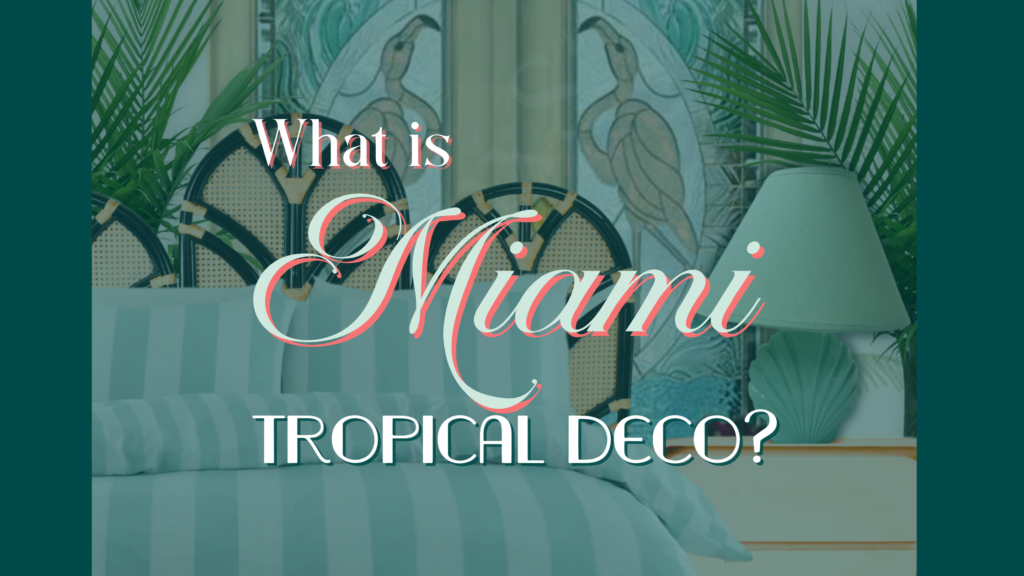
Miami has gone through a lot of design eras, but there’s one that always pulls me in: the pastel, glossy, tropical-glam look of the 80s and early 90s. It’s a mix of Art Deco curves, hotel luxury, soft neon color palettes, and sun-washed tropical energy. I call it Miami Tropical Deco, and this blog documents how I’m building a modern version of that style inside a builder-grade condo.
The reasons why I fell in love with Miami and have incorporated this look into my home are for another post, but today, let’s talk about what defines the aesthetic that I am so passionate about.
These are the fundamentals of Miami Tropical Deco design.
1. Art Deco Architecture
Miami’s signature style begins with its Art Deco hotel district. Built in the 1920s–40s, these pastel-toned buildings used soft curves, glass block, neon trims, and coastal motifs inspired by the beach. Miami’s version of Deco was lighter and more playful than the darker, industrial “Gatsby Deco” found in other cities, but this is why it became the perfect foundation for the Tropical Deco look.
Think:
- peach, mint, and aqua facades
- curved corners and porthole-style windows
- glass block panels that glow at night
- sunburst and wave patterns
- breeze block fencing
- palm frond and seashell accents
This early architecture set the stage for the ’80s revival that blended Deco with glamour, color, and Miami’s tropical atmosphere.
2. Pastel Color Stories
Leonard Horowitz, a key figure in the preservation of Miami Beach’s Art Deco District, developed a 40-color pastel palette to guide the restoration of the neighborhood’s historic buildings. Although the full palette isn’t publicly available, the colors still seen on the buildings today give us a strong sense of what it included. Soft peach, mint green, coral, aqua, lavender, and pale yellows. These are the same hues you’ll notice in a South Beach sunrise or on the facades of the Art Deco hotels along Ocean Drive.
It’s not just about being colorful. It’s about being soft, dreamy, and relaxing, which is exactly how one feels while relaxing poolside in Miami.
The ‘80s loved reflective surfaces, but in Miami, they were paired with art deco curves, tropical motifs, and hotel-inspired shapes.
Think:
- brass or chrome coffee tables
- glass or lacquer dining tables
- glass block walls and accents
- lacquered vanities, countertops, and tables
- glossy pastel accents
Using these elements, everything feels clean, bright, and oh-so-glamorous.
Miami interiors have always leaned Deco, but in the ‘80s they blended it with postmodern design, using rounded edges, sculptural lamps, geometric vases, and statement chairs.
If something has curves, shine, or personality, it fits this motif.
5. Hotel-Suite Comfort
The best Miami interiors feel like a vacation:
- soft lighting
- plush bedding
- tropical greenery
- crisp white towels
- mini bar vibes
- attention to atmosphere
It’s not minimal. It’s intentional and a little indulgent.
6. Tropical Elements
Not tropical in a “coastal beach” way, but rather tropical in a tasteful, airy, botanical way.
- palms and ferns
- rattan accents
- bamboo moments
- seashell or coral shapes
- scalloped molding
- terrazzo wave inlays
- panels engraved with flamingos and swans
Incorporating textures found in nature, this creates balance with the bold glam elements that make up most of the Miami Tropical Deco aesthetic.
Why This Aesthetic?
I’ve always been drawn to interiors that feel nostalgic and escapist. The Miami of the 80s and 90s was bold, colorful, and full of personality. It was also playful — something I think we’re all craving more of.
I’m building this blog as I design my own home around these elements, mixing:
- thrifted 80s and 90s finds
- renter-friendly upgrades
- color theory
- glossy glam details
- and a lot of personal inspiration
If you love interiors with character, color, and a little bit of Miami magic, you’ll feel at home here.
What’s Coming Next
I hope you follow along, because we are just getting started. In the future,, I’ll be sharing:
- Thrift guides to find this look for less
- room concept moodboards
- renter-friendly upgrades
- color palettes
- vintage pieces to look for
- the design process for transforming my builder-grade home
This is the start of something I’ve wanted to build for a long time, and I’m excited you’re here.
– Kayla Sue
